OKX launches virtual Mastercard for stablecoin spending in the U.S.
OKX announced on Monday, Nov. 2, that its virtual Mastercard, OKX Card, is live for eligible customers in the United States. The card lets customers make purchases backed by stablecoins held in OKX Pay; availability is not universal across U.S. locations.
 By Oliver Reed, Crypto card developments editor · Updated
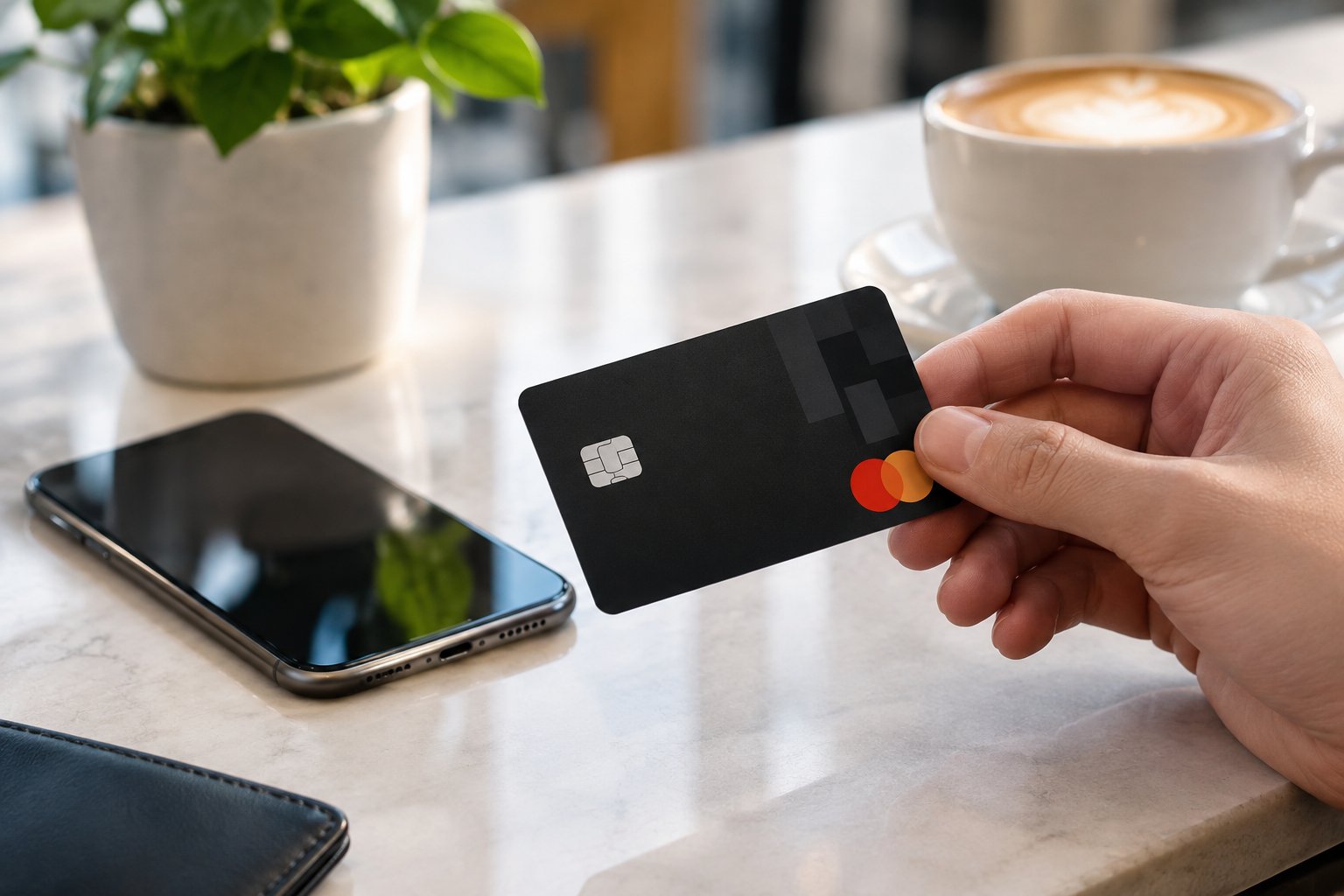
The launch brings OKX Card, a Mastercard-powered virtual card, to the U.S. market. OKX says customers can spend against USDC, USDT and USDG held in their OKX Pay wallet, without first converting the stablecoins to fiat or moving them to a separate balance. The issuer announced the launch on Nov. 2.
How the card works
According to OKX’s launch announcement, the card is virtual and can be activated in the OKX app, then added to Apple Pay or Google Pay. At checkout, the purchase is backed by a balance of supported stablecoins in OKX Pay. OKX says customers do not need to convert those funds to fiat beforehand.
PYMNTS likewise reported that the card uses USDC, USDT and USDG held in OKX Pay and can be used at merchants that accept Mastercard. The card’s funding route is therefore tied to the OKX Pay wallet: it is not described as a way to spend stablecoins held in an unrelated wallet.
The product’s legal and payment structure is distinct from a debit card. TokenPost reported that WebBank issues it as a secured charge card, backed by the supported stablecoin collateral. TokenPost also reported that the product is not classified as a debit, prepaid or stored-value card.
U.S. availability and what to check
OKX and PYMNTS described the launch as covering eligible customers in most U.S. states and select territories. TokenPost characterized availability as limited to select states and territories. The reports agree that the card is not available everywhere in the United States, so the announcement should not be read as nationwide access.
For holders considering the launch, the practical checks are whether the card is available in their location, whether they can use OKX Pay, and which repayment option and current terms apply to their account. OKX says the card can be activated in its app. The issuer’s availability and terms should be checked before relying on the card for a purchase. CryptoCardCompass’s comparison page is the relevant place to compare card details; this report does not set out product fees, rewards, limits or eligibility terms.
Repayment and collateral
TokenPost reported that when a purchase is authorized, the corresponding stablecoin balance is held as collateral. With automatic repayment enabled, OKX liquidates that collateral one business day after the transaction settles. Customers who instead repay in dollars receive a statement every 28 days, with payment due no later than 21 days after receipt, according to TokenPost.
Those details matter because the card’s spending is secured by crypto assets rather than being described as a conventional debit transaction that immediately draws dollars from a bank account. TokenPost reported that supported stablecoins held in OKX Pay are not FDIC-insured. It also reported that if collateral loses its peg and its sale proceeds do not cover the card balance, the cardholder remains responsible for the shortfall.
Background and next checks
The U.S. launch follows OKX and Mastercard’s announcement of a partnership on April 28, 2025. PYMNTS reported that OKX had previously launched the card in the European Economic Area in January and in selected South Asian and African countries in July. The U.S. launch extends the card’s availability to another market, but does not establish that the same access or terms apply across regions.
For U.S. customers, the next step is to confirm current availability and repayment terms through OKX’s app and issuer materials. Check how collateral is handled under the selected repayment setting, and confirm that the supported assets and wallet arrangement match how you intend to fund purchases. The announcement establishes that the card is live for eligible customers; it does not mean every U.S. resident can use it.
Source: okx.com